Conversation guide (PDF)
A one-page list of questions to bring to a doctor, physiotherapist, or qualified coach when training context matters to a medical decision.
Request the guideA practical index for readers who want to compare concepts, prepare for a professional conversation, or keep a simple record before adjusting a routine. None of the material here is a substitute for individualized advice.
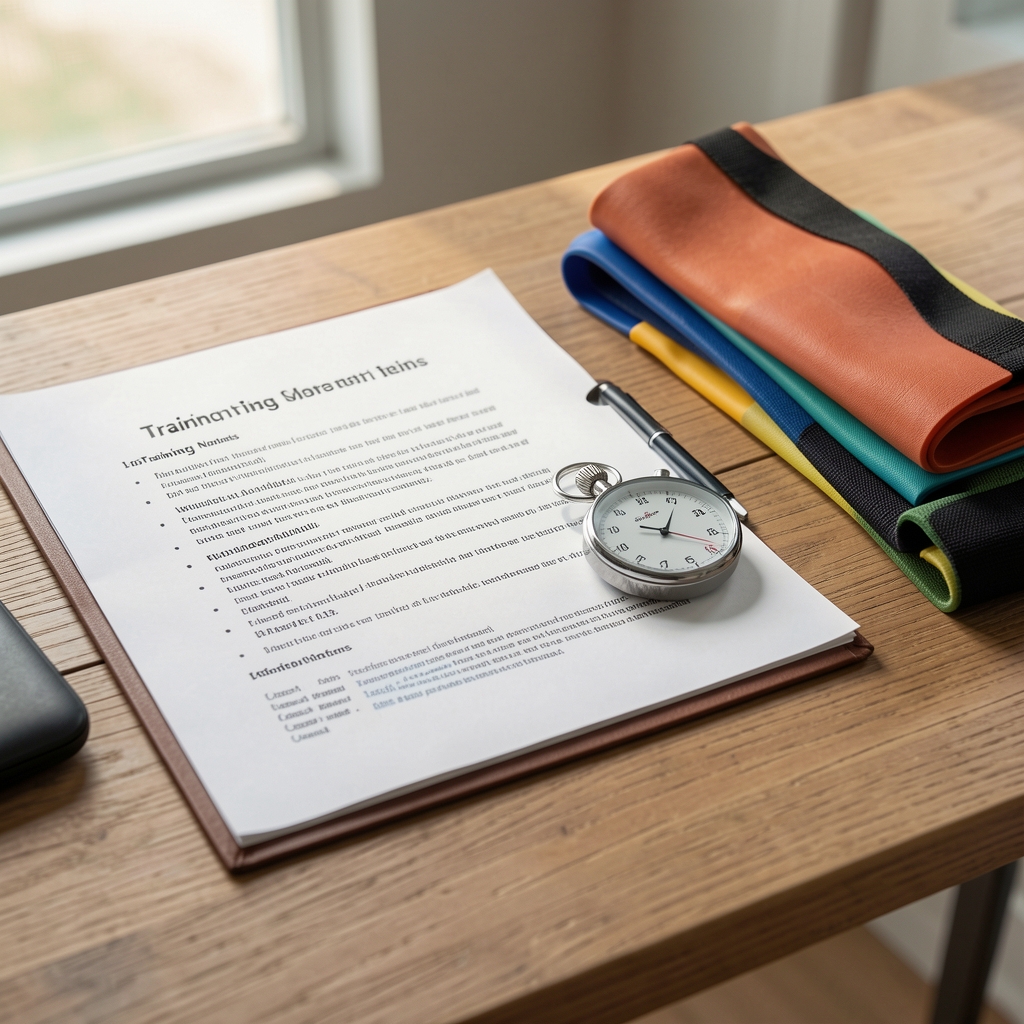

The resources below are organized by what a reader is trying to do rather than by topic alone: preparing a question, keeping a record, or comparing one concept against another. Each entry links to a fuller article or a downloadable reference so you can move from a quick overview to more detail without losing your place.
We update this index when a new reference is added or an older one is revised, and the revision date for the index itself is noted at the bottom of the page.
A one-page list of questions to bring to a doctor, physiotherapist, or qualified coach when training context matters to a medical decision.
Request the guideA simple printable framework for recording effort, sleep, movement, and one sentence of reflection per day.
See the journal formatShort, plain-language definitions of the physiology and training terms used across the site, collected in one document.
Jump to the glossaryRequests for printable references are handled by the editorial desk and are typically fulfilled within three business days. There is no charge for these documents, and none of them substitute for professional guidance.
| If your question is about… | Start here | Read next |
|---|---|---|
| How the body adapts to training load | Physiology | Endurance |
| Sustained effort and aerobic capacity | Endurance | Recovery |
| Strength and movement patterns for daily life | Functional training | Mobility |
| Rest, sleep, and managing fatigue | Recovery | Nutrition |
| Eating patterns around activity | Nutrition | Journal |
Short excerpts with attribution and a link back to the original article are welcome. Full reproduction of an article requires written permission from the editorial desk.
No. It covers terms that recur most often across Gorland articles. Less common terms are defined inline the first time they appear in a given piece.
The index is checked whenever a new article or downloadable reference is published, typically every few weeks.
“A glossary or a comparison table is useful for orienting yourself before a conversation with a professional — it is not a substitute for that conversation, especially where a medical history or an existing injury is involved.”
— Gorland editorial desk
Index last reviewed 5 October 2026. Questions about any resource on this page can be sent through the contact page or by phone at +62 857 2309 4185.